
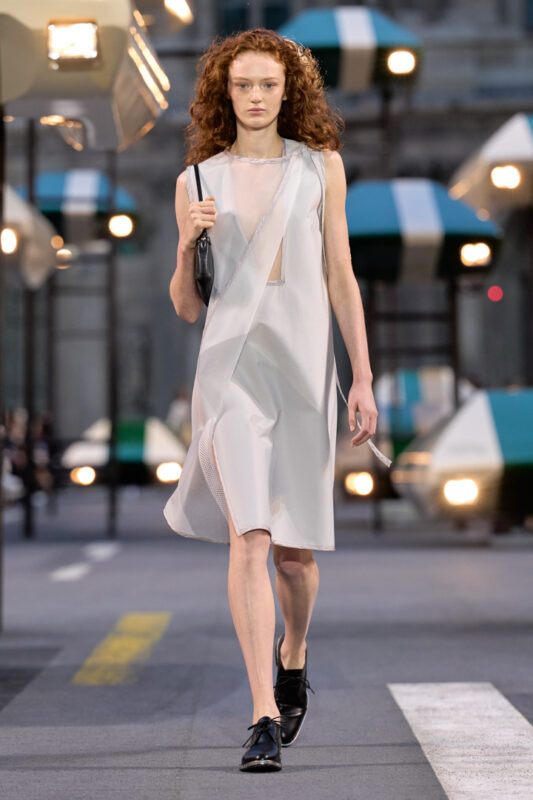
Designed by Nicolas Ghesquière, the collection explores an intuitive harmony between clothing, the human body and movement through ultralight materials and fluid construction.
Louis Vuitton’s Women’s Spring-Summer 2027 collection, Ergonomie, places the moving body at the centre of design. Created by Nicolas Ghesquière, the collection considers how the conditions, capabilities and movements of the human form can shape clothing, establishing an intuitive relationship between object, body and action.
Presented at the Cour Carrée du Louvre in Paris on 6 October 2026, the collection brings this exploration into dialogue with the Maison’s heritage of travel. Lightness, functionality and freedom of movement connect contemporary ergonomic thinking with Louis Vuitton’s enduring pursuit of forms designed to accompany life in motion.
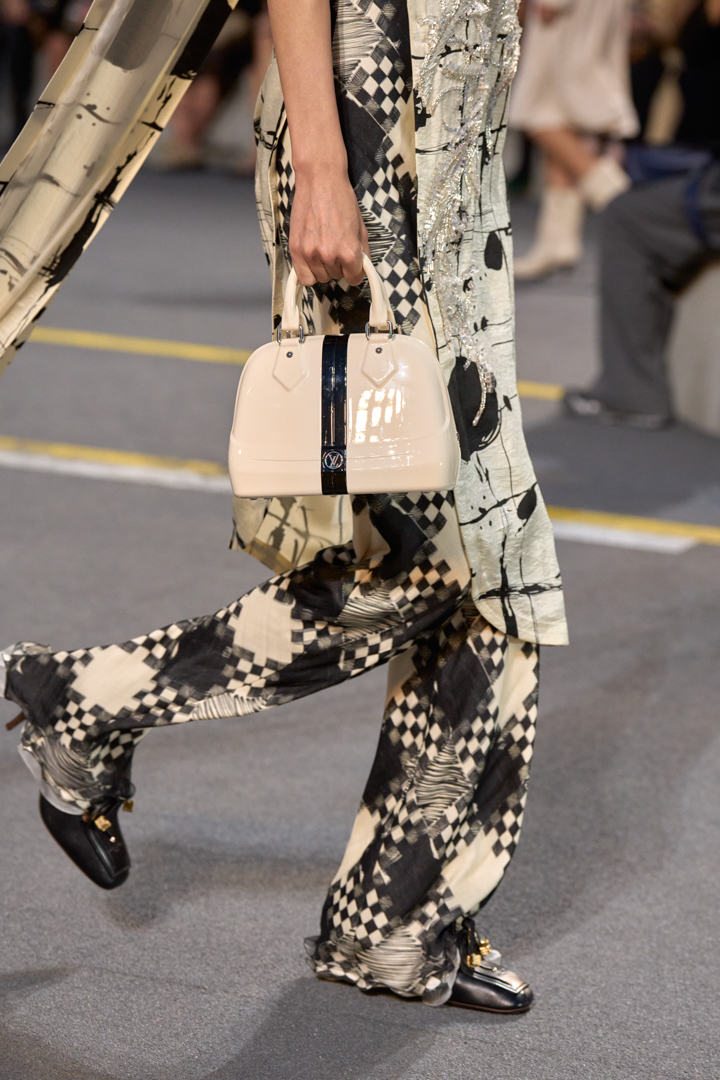
“There is an intuitive relationship, between object, body and action. A harmony,” Louis Vuitton states in its collection notes.
This affinity between modern concerns and the Maison’s heritage rests on a shared principle: form defined by function. Clothing becomes a means of easing movement, extending an ideology that can translate across time and disciplines.
For Ergonomie, the physique within determines the garment. Rather than imposing a fixed external silhouette, clothes mould to the wearer, responding to the body’s changing contours and gestures.
“Nothing is rigid, everything is fluid, like a second skin serving to define physicality in motion,” the Maison explains.
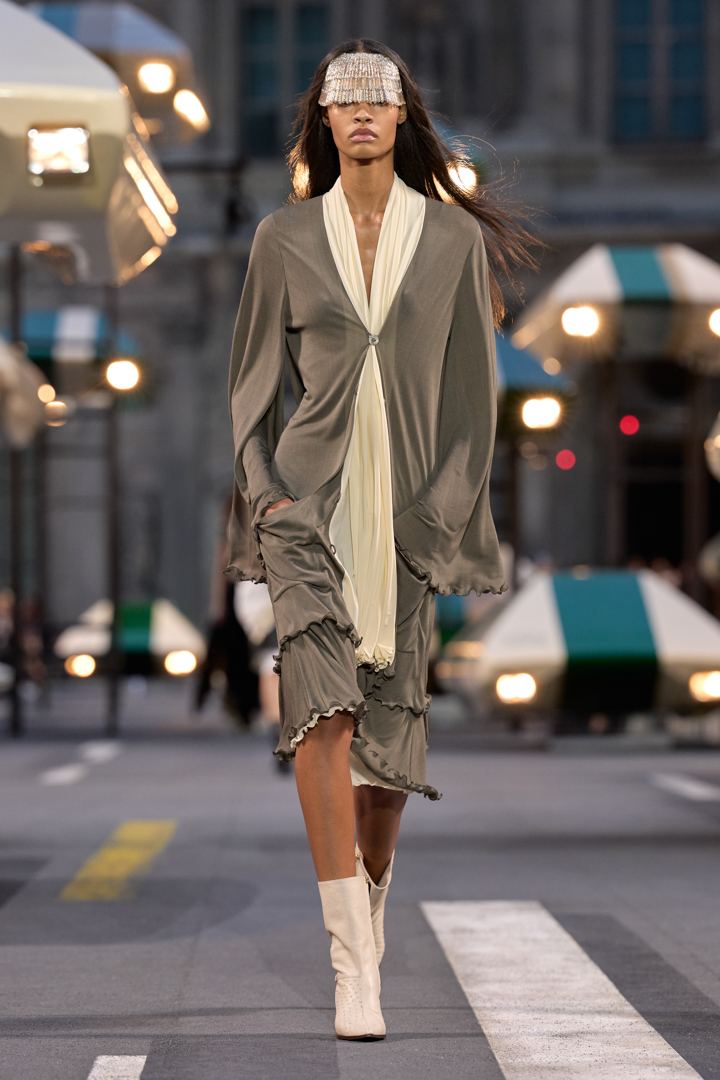
Engineered for action and rooted in instinct, these garments reflect the understanding that the body is built for locomotion. Each piece possesses an innate capacity to transform, combining adaptability with an extraordinary sense of physical lightness.
Throughout the collection, structure remains while rigidity is removed. Materials and silhouettes are calibrated to a kinetic body, with garments conceived like anatomy: responsive, fluid and continually reshaped by the person within.
The result is a sensation of simplification and physiological ease. Pieces that appear structureless reveal complex construction beneath their effortless surfaces. Different tensions within the materials create intricate topographies that mirror the body, allowing cloth and leather to rest against the wearer like a second skin through sensation and function.
“A lightening, a sensation of simplification, a physiological ease,” reads the collection’s accompanying text.
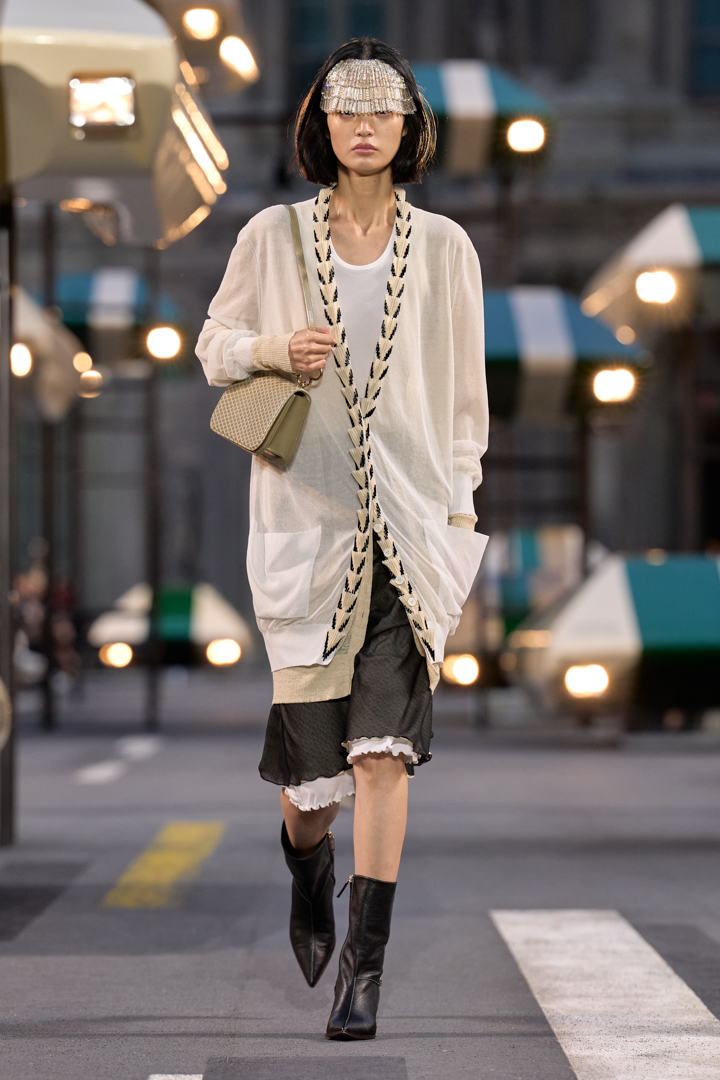
Ultralight fabrication carries this vision across the wardrobe. Double and triple composite chiffons, carré silks, and scarf fabrics in silk and cashmere introduce an almost weightless quality to a spectrum of garments.
Traditional tailoring is reengineered through reduction and streamlining. Internal layers are removed, preserving the presence of construction while releasing its weight. Knitwear delineates the figure, while footwear grounds the otherwise weightless forms.
The scenography introduces a deliberate contradiction. Against a static cityscape, individual figures move with the incongruous lightness of a feather or balloon. The surrounding stillness amplifies their presence, drawing attention to the dynamic human body and the clothing that accompanies it.
With Ergonomie, Nicolas Ghesquière brings Louis Vuitton’s principles of lightness, function and travel into a wardrobe shaped by the wearer. Structure becomes fluid, materials respond to motion, and the body gives each garment its evolving form.