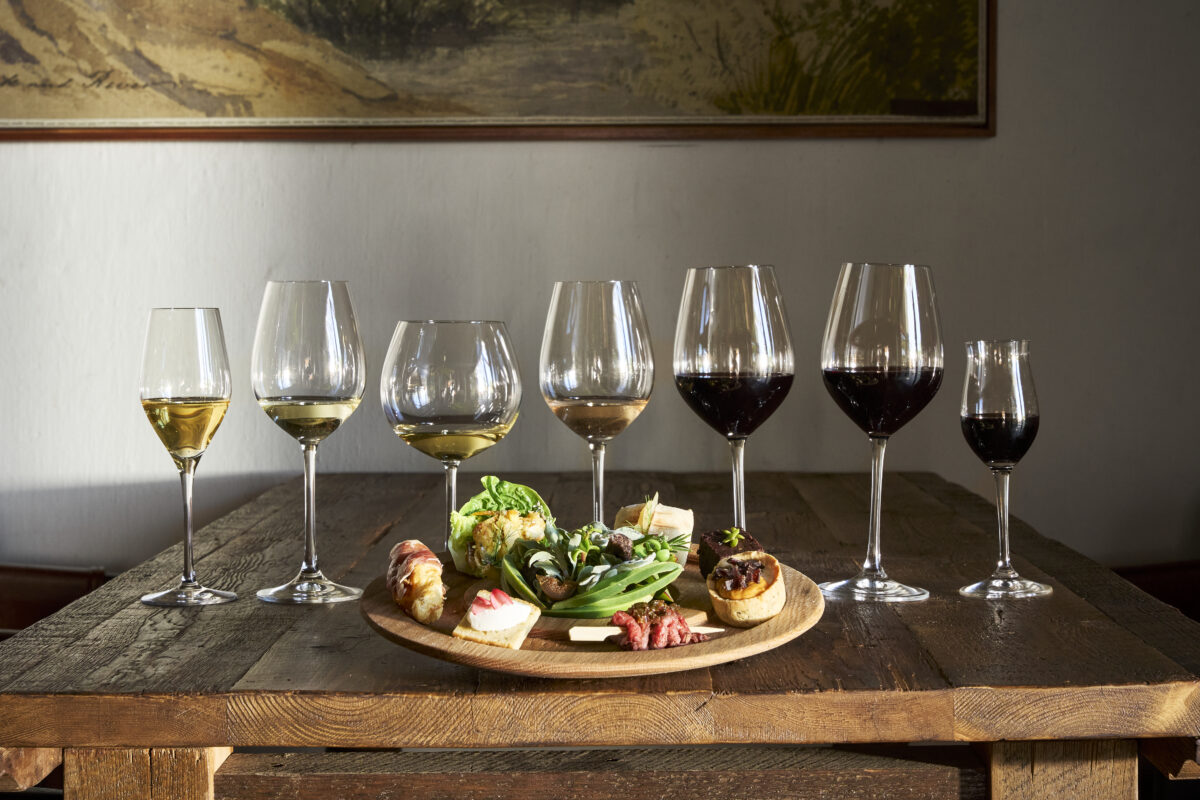
What do you get when you take indigenous ingredients and match them with stories of who first used them, how and why, and then pair them with top-rated wines shaped by the nearby ocean?
That’s the question Michelle Theron, new in-house head of gastronomy at Vergenoegd Löw, asked on joining the luxury Stellenbosch wine estate. Her answer? Seven dishes, seven wines and seven stories in a unique and very original pairing of aromas, flavours and textures across food and wine.
“Here was a great opportunity to pay homage to sometimes overlooked ingredients and tastes that form a central part of our culinary traditions, to refresh and revive them with inventive new touches and to remind South Africans and our visitors of the rich treasure trove of flavours right here in our midst.”
She has entirely reimagined the earlier Indigenous Tasting at Vergenoegd Löw, when visitors were simply exposed to local tastes presented with wines from the range. For the new Indigenous Food & Wine Pairing she has conceived seven very different dishes, melding tastes and textures in surprising and exciting new ways and where at least one indigenous taste stars on the plate.
Sometimes, more than one native flavour is featured. And, wherever possible, ingredients are from the estate that prides itself on a cornucopia of regeneratively grown and raised produce. From vegetables and herbs to beef, lamb and poultry, as well as eggs, milk, cheese and honey, it follows a farm-to-table ethos. When it does source ingredients externally, it favours local small-scale suppliers who share the focus on soil health and sustainability in delivering outstanding quality ingredients.
“All the dishes have been devised to showcase the suitability of our estate wines with our fresh farm produce. Wines are made by the award-winning Vusi Dalicuba, and are very expressive of their location that we call merroir. It’s a mashup of mer/sea and terroir, as we are so close to the sea and the influence it bears, from the salt-laden winds that cool the vines to slowing down ripening and concentrating flavours to their ability to keep disease at bay.
“Vines are a little like people, a little stress helps to forge character. And in the same way, the resilience and resourcefulness of early South Africans come to the fore in the fascinating ways in which people of the past found or foraged ingredients and prepared them to last for the lean times. You can say that literally every ingredient has a special story to tell.
“Some of these ingredients are better known in other contexts. Spekboom (Portulacaria afra) for example is so ubiquitous it also goes by a host of other names from purslane tree to pork bush, elephant tree or dwarf jade. Many associate the plant with its ability to capture and store carbon in the soil, or for its medicinal properties. For centuries crushed spekboom leaves have been used to relieve blisters, soothe skin rashes, insect bites and sunburn. But nowadays, fewer people are aware of just how delicious, crisp and juicy the leaves taste.”
In one instance she uses the leaves in a salad dressing, in another to make chutney, and in a third, as the special ingredient in a brownie to add a spark of fruitiness to offset the depth and density of the chocolatey richness.
Amongst the other native ingredients featured in the newly unveiled Indigenous Food & Wine Pairing are bokkoms, that are salted and dried harders(Chelon richardsonii), a near-shore fish that Theron uses as an anchovy alternative in a re-interpretation of a classic Caesar salad; roosterkoek, made from her special sourdough recipe and roasted over the coals; kaiings, the crackling or rinds from pork, sheep or beef that infuse dishes with an umami layer of flavour; amasi, that is fermented milk; biltong made from the eco-grazing Dexter cattle on the farm and who help to keep the vineyards free of weeds, and Kei apple that adds an electric tang on the tongue to dishes in which it is used.
Cured fish, cured meats, pickles, relishes, breads, pastries, cheeses, jams and preserves for the unique tasting are produced mostly in house.
Dishes include cured yellowtail with roosterkoek and Kei apple preserve, served with the estate’s Cap Classique, a Blanc de Blanc made from Chenin Blanc; a kaiing pastry and prosciutto served with Chardonnay; and Dexter beef carpaccio and spekboom chutney paired with Merlot.
Staff have been trained to present the tasting so they can include as much historical, culinary and wine detail as guests wish to hear.
Used to monitor number of Google Analytics server requests when using Google Tag Manager
1 minute
_gid
ID used to identify users for 24 hours after last activity
24 hours
_ga_
ID used to identify users
2 years
_gali
Used by Google Analytics to determine which links on a page are being clicked
30 seconds
_ga
ID used to identify users
2 years
__utmx
Used to determine whether a user is included in an A / B or Multivariate test.
18 months
__utmv
Contains custom information set by the web developer via the _setCustomVar method in Google Analytics. This cookie is updated every time new data is sent to the Google Analytics server.
2 years after last activity
__utmz
Contains information about the traffic source or campaign that directed user to the website. The cookie is set when the GA.js javascript is loaded and updated when data is sent to the Google Anaytics server
6 months after last activity
__utmc
Used only with old Urchin versions of Google Analytics and not with GA.js. Was used to distinguish between new sessions and visits at the end of a session.
End of session (browser)
__utmb
Used to distinguish new sessions and visits. This cookie is set when the GA.js javascript library is loaded and there is no existing __utmb cookie. The cookie is updated every time data is sent to the Google Analytics server.
30 minutes after last activity
__utmt
Used to monitor number of Google Analytics server requests
10 minutes
_gac_
Contains information related to marketing campaigns of the user. These are shared with Google AdWords / Google Ads when the Google Ads and Google Analytics accounts are linked together.
90 days
__utma
ID used to identify users and sessions
2 years after last activity
Clarity is a web analytics service that tracks and reports website traffic.